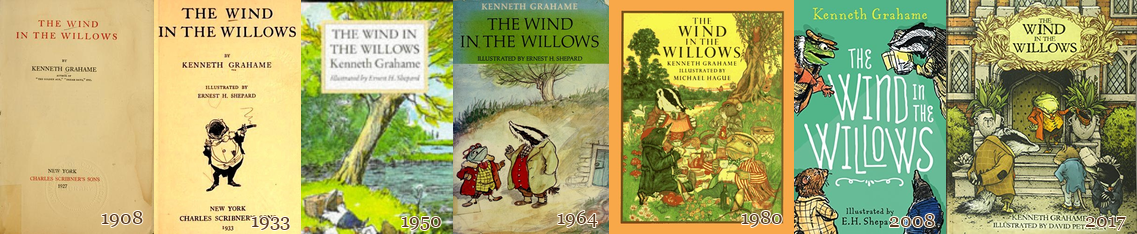
- 1908: Charles Scribner's Sons first American edition
- 1933: Charles Scribner's Sons edition, illustrated by E. H. Shepard
- 1950: Methuen edition, illustrated by Arthur Rackham
- 1964: Scribner edition, illustrated by Ernest H. Shepard
- 1980: Henry Holt and Company edition, illustrated by Michael Hague
- 2008: Egmont edition, illustrated by E. H. Shepard
- 2017: IDW Publishing edition, illustrated by David Petersen
The Wind in the Willows
A riverbank friendship, with Toad making trouble.
Overview
The Wind in the Willows is a children’s classic about Mole, Rat, Badger, and the wildly self-important Mr. Toad. It begins with a spring escape from housework and grows into a warm, funny book about friendship, home, and the pull of the open road.
The river scenes are the heart of it. Rat knows how to make an ordinary outing feel like a small feast, while Mole brings a newcomer’s wonder. Toad gives the book its jolts of chaos. His love of cars, costumes, and grand speeches keeps dragging the quiet world off balance.
The pace wanders on purpose. Some chapters are cozy visits, some are comic chases, and one has a dreamlike hush that may surprise younger readers. The prose is older but clear, especially in an unabridged edition with E. H. Shepard’s illustrations.
Is This Book for You?
Yes, if...
- You want a gentle animal story with real comic energy.
- You like rivers, picnics, old homes, and friendships that feel lived in.
- You can enjoy Toad's wild plans without needing the plot to stay calm.
No, if...
- You want nonstop action or a tight modern pace.
- You need every chapter to follow the same plot thread.
- You dislike old-fashioned English turns of phrase.
Summary
Notable Quotables
“Spring was moving in the air above and in the earth below and around him, penetrating even his dark and lowly little house with its spirit of divine discontent and longing.”
“After all, the best part of a holiday is perhaps not so much to be resting yourself, as to see all the other fellows busy working.”
“Always good-tempered, always glad to see you, always sorry when you go!”