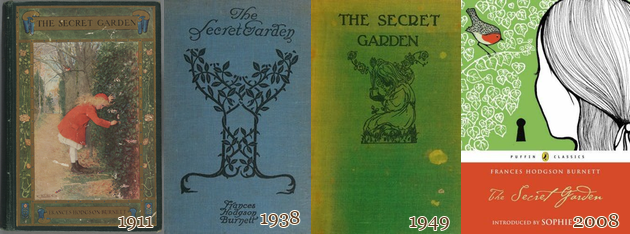
- 1911: First American edition, Frederick A. Stokes, cover by Maria Louise Kirk
- 1938: J.B. Lippincott Company edition
- 1949: William Heinemann Ltd. edition
- 2008: Puffin Classics edition, introduced by Sophie Dahl
The Secret Garden
A locked garden, two lonely children, and the slow surprise of coming alive.
Overview
The Secret Garden is Frances Hodgson Burnett’s story of Mary Lennox, a sour, unwanted girl uprooted from India after her parents die, who is shipped to a gloomy Yorkshire manor and slowly brought back to life by a locked, forgotten garden. The book is gentle and restorative rather than dramatic. Its real pleasure is watching dead things grow.
Mary arrives at Misselthwaite Manor selfish, cross, and used to being served. The house is huge and half-empty. Her uncle is away. But a friendly robin, a kind chambermaid named Martha, and Martha’s brother Dickon lead Mary toward a walled garden that has been locked for ten years since the death of her aunt. As she clears the tangled beds and coaxes the roses back, she changes too. Inside the manor waits a second lonely child, even more trapped than she was.
The book reads easily, and its Edwardian voice is warm rather than stiff. The one small hurdle is Martha and the gardener’s broad Yorkshire dialect, which takes a page or two to settle into. Some modern readers also find the children’s talk of “Magic,” by which they mean fresh air, good food, and stubborn positive thinking, a little hard to swallow. But the story’s faith in growth, the outdoors, and second chances is exactly why it has never gone out of print. Read it when you want something quiet, green, and hopeful.
Is This Book for You?
Yes, if...
- You like stories about quiet healing, growth, and the slow return of life.
- You want a children's classic with real feeling that still works for grown-up readers.
- You enjoy gardens, nature, and characters who change because of where they are.
No, if...
- You want a fast plot full of danger, twists, or big action.
- You prefer modern prose and have little patience for Yorkshire dialect and gentle pacing.
- You dislike stories where the happy ending is never really in doubt.
Summary
Notable Quotables
“Is the spring coming?” he said. “What is it like? You don’t see it in rooms if you are ill.”
“Where you tend a rose, my lad, A thistle cannot grow.”
“At first people refuse to believe that a strange new thing can be done, then they begin to hope it can be done, then they see it can be done—then it is done and all the world wonders why it was not done centuries ago.”