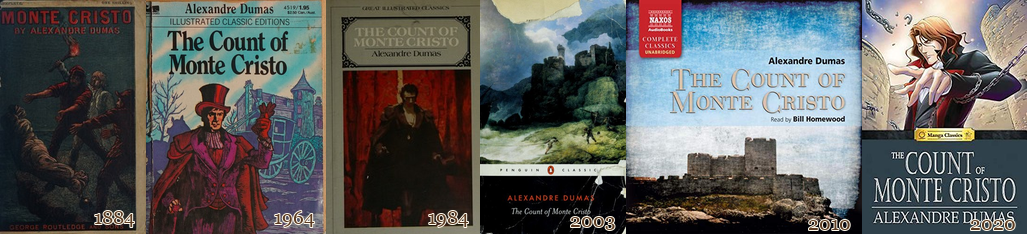
- 1884: George Routledge illustrated edition
- 1964: Playmore edition
- 1984: Dodd, Mead edition
- 2003: Penguin Classics edition, Robin Buss translation
- 2010: Naxos AudioBooks edition
- 2020: Manga Classics edition
The Count of Monte Cristo
A wronged sailor turns prison, treasure, and time into revenge.
Overview
The Count of Monte Cristo is Alexandre Dumas’s great revenge novel. It follows Edmond Dantès, a young sailor whose enemies frame him just as his life is about to take off. They send him to the island prison of the Château d’If. He loses fourteen years there, then escapes with a dead man’s secret and a huge hidden fortune. The rest of the book is one long, patient plan: Dantès turns himself into the rich and mysterious Count and goes back to settle accounts with the men who ruined him.
Reading it feels less like one plot than a slow game of chess. The Count moves through Paris as a friend, a banker, and a hidden enemy, and Dumas lets each plan take its time. Love affairs, poison, debts, duels, stolen children, and secrets all feed into one big design. The cast is large. The book asks you to remember names and old wrongs for hundreds of pages before the traps close.
It is very long, about 460,000 words, and not every side path earns its keep. Some readers love the size of it. Others find the middle slow. The free English text most people read is an older translation. It moves fast, but it flattens some of Dumas’s style and trims a bit here and there. Come for the revenge, stay for the patience, and let the book go slow where it wants to.
Is This Book for You?
Yes, if...
- You want one of the great revenge plots, told big and told slowly.
- You can hold a large cast and a long memory across hundreds of pages.
- You like stories where a patient planner sets traps that take years to spring.
No, if...
- You want a tight, fast novel that resolves in a few hundred pages.
- You lose patience with subplots, digressions, and a sprawling cast.
- You expect a clean modern translation in the free digital edition.
Summary
Notable Quotables
“Hatred is blind, rage carries you away; and he who pours out vengeance runs the risk of tasting a bitter draught.”
“There is neither happiness nor misery in the world; there is only the comparison of one state with another, nothing more. He who has felt the deepest grief is best able to experience supreme happiness.”
“all human wisdom is summed up in these two words,—‘Wait and hope.’”