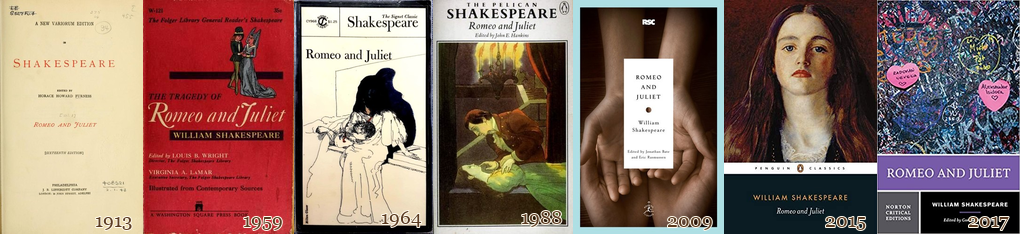
- 1913: J. B. Lippincott, New Variorum Edition
- 1959: Washington Square Press, Folger Library General Reader's Shakespeare
- 1964: Signet Classics
- 1988: Pelican Shakespeare, Penguin Books
- 2009: Modern Library, RSC edition
- 2015: Penguin Classics
- 2017: Norton Critical Editions, W. W. Norton
Romeo and Juliet
A feud, a secret wedding, and a love that runs out of time.
Overview
Romeo and Juliet is Shakespeare’s tragedy of two young lovers from rival families in Verona. They meet, fall in love, and marry in secret within a single week, while the old hatred between the Montagues and the Capulets closes in around them.
It is a play built for speed and pressure. Five acts move from street brawls to a masked party, to a balcony scene, to a rushed wedding, to exile and a desperate plan that almost saves them. Shakespeare writes part of it in bright, playful verse and part in something darker and tighter, so the jokes and the dread keep trading places.
Reading it on the page is different from watching it. The language is early modern English, dense with puns, sonnets, and old forms of speech, and a few scenes lean on imagery more than plain sense. An annotated edition helps a lot. But the central pull is simple and stays simple: two young people try to love each other inside a world that would rather they didn’t.
Is This Book for You?
Yes, if...
- You want the most famous love story in English in its original form.
- You like plays that move fast, mix comedy with dread, and pack big turns into a few days.
- You're reading for school, for performance, or for the lines everyone already half-knows.
No, if...
- You want a slow, modern novel with deep inner lives and a long buildup.
- You find early modern English, puns, and verse hard going without notes.
- You already know the ending and want a story that still surprises you in its plot.
Summary
Notable Quotables
“But soft, what light through yonder window breaks? / It is the east, and Juliet is the sun!”
“What’s in a name? That which we call a rose / By any other name would smell as sweet;”
“A plague o’ both your houses. I am sped.”