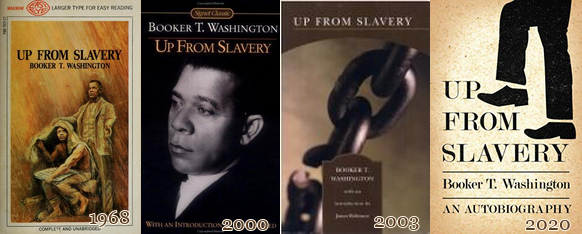
- 1968: Lancer Books edition
- 2000: Signet Classics edition
- 2003: Barnes & Noble Books edition
- 2020: Read & Co. History edition
Up from Slavery
A life story built around work, study, and institution-making.
Overview
Up from Slavery is Booker T. Washington’s 1901 autobiography. It follows his path from childhood in slavery to Hampton Institute, public speaking, and the building of Tuskegee Institute in Alabama. The book is less a private confession than a record of how he learned, worked, taught, and persuaded others to back a school.
Washington tells the story with a builder’s eye. He notices jobs, buildings, money, travel, and the people who taught him what steady effort can do. The result moves through hard beginnings, but much of its energy comes from schoolrooms, workshops, and the slow making of a public institution.
The book is clear and fairly short, though its public voice can feel formal and self-directed. It gives one influential view of Black education and leadership after the Civil War, not the whole argument. Read it for Washington’s life and for Tuskegee’s early years, then pair it with a writer who challenges his outlook.
Is This Book for You?
Yes, if...
- You want a memoir about education, work, public speaking, and building a school from the ground up.
- You like practical stories of ambition that show the long work behind a public career.
- You want a short entry point into Booker T. Washington and the history of Tuskegee.
No, if...
- You want a full history of Black political thought after the Civil War.
- You need a memoir that spends more time on private feeling than on public work.
- You want a book that questions Washington's public ideas from the inside.
Summary
Notable Quotables
“Before the end of the year, I think I began learning that those who are happiest are those who do the most for others.”
“Instead of studying books so constantly, how I wish that our schools and colleges might learn to study men and things!”
“No race can prosper till it learns that there is as much dignity in tilling a field as in writing a poem.”