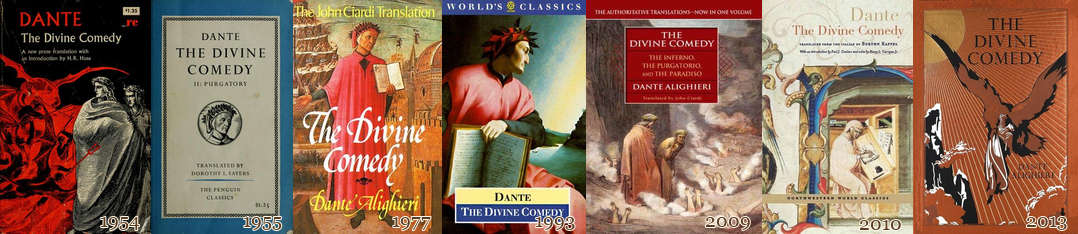
- 1954: Rinehart edition
- 1955: Encyclopædia Britannica edition, Dorothy L. Sayers translation
- 1977: Norton edition, John Ciardi translation
- 1993: Oxford University Press edition
- 2009: Penguin edition, C. H. Sisson translation
- 2010: Northwestern University Press edition, Robin Kirkpatrick translation
- 2013: Canterbury Classics edition
The Divine Comedy
One pilgrim walks through Hell, Purgatory, and Paradise.
Overview
The Divine Comedy is Dante’s three-part poem about a lost man who is led through Hell, Purgatory, and Paradise. Virgil guides the first two climbs. Beatrice takes him through Heaven. The journey is full of monsters, doomed lovers, popes, poets, old rivals, and fierce ideas about what a human life is for.
This isn’t a soft-focus tour of the afterlife. Hell is vivid, cruel, and often darkly funny. Purgatory is harder work, with more prayer and thought. Paradise asks for the most patience, but it gives the poem its final lift. A translation with notes helps because Dante expects you to notice people, fights, and church debates from his own world.
Read it for the images and the movement first. Don’t worry about catching every name. The poem often pauses to judge a life, then moves on to the next strange scene. Longfellow is free to read and has a grand old sound. A newer translation may feel easier on a first trip.
Is This Book for You?
Yes, if...
- You want a guided trip through Hell, Purgatory, and Paradise with big moral stakes.
- You like poetry that is packed with strange places, sharp images, and real anger.
- You are ready to read slowly and use notes when the politics or theology gets dense.
No, if...
- You want a quick fantasy quest with little need for context.
- You dislike poetry, religious debate, or long lists of people from old Italian history.
- You want a calm, even story rather than a journey that keeps changing shape.
Summary
Notable Quotables
“All hope abandon, ye who enter in!” — translation: Henry Wadsworth Longfellow
“There is no greater sorrow Than to be mindful of the happy time In misery, and that thy Teacher knows.” — translation: Henry Wadsworth Longfellow
“The Love which moves the sun and the other stars.” — translation: Henry Wadsworth Longfellow