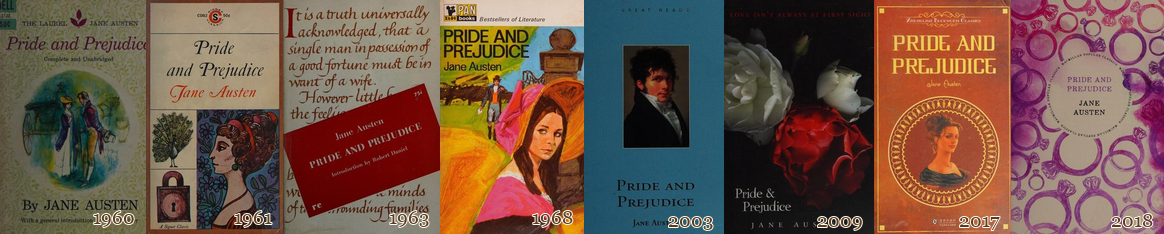
- 1960: Dell Publishing edition
- 1961: New American Library edition
- 1963: Holt, Rinehart and Winston edition
- 1968: Pan Books edition
- 2003: Planet Three Publishing edition
- 2009: HarperCollins Children's Books edition
- 2017: Dolphin Books edition
- 2018: Macmillan Popular Classics edition
Pride and Prejudice
Courtship, money, manners, and the hard work of seeing clearly.
Overview
Pride and Prejudice is Jane Austen’s comedy of courtship. It follows Elizabeth Bennet, Fitzwilliam Darcy, and a family with five daughters who cannot inherit their own home. It is a romance, but the real engine is judgment. Who sees clearly? Who only seems impressive? Who has money, and who mistakes charm for character?
The book’s world is narrow on purpose. People call on neighbors, dine, dance, write letters, visit family, compare incomes, and listen closely. Any sentence can become evidence. That small scale is part of the pleasure. Austen makes a drawing room feel risky because reputation and marriage can shape a woman’s whole future.
Expect wit before open feeling. Elizabeth is funny because she is quick. She is moving because she learns that being quick is not the same as being right. Darcy changes too, but this is not just a proud man softened by love. Both Elizabeth and Darcy must give up a flattering story about themselves before the ending feels earned.
The prose is friendly for an early nineteenth-century novel, though the social rules take some patience. If you come for banter and romance, you will get them. If you also watch the money, family shame, inheritance rules, and the cost of a bad marriage, the comedy cuts much deeper.
Is This Book for You?
Yes, if...
- You like romances where attraction grows through wit, pride, mistakes, and honest self-correction.
- You enjoy social comedy built from talks, visits, letters, dances, and small rules of manners.
- You want a classic that is sharp about money and marriage, but still warm about love.
No, if...
- You want big action, danger, travel, or a plot built around spectacle.
- You dislike slow changes of mind and feeling in a small social world.
- You need every sympathetic character to show their feelings in an open, emotional way.
Summary
Notable Quotables
“It is a truth universally acknowledged, that a single man in possession of a good fortune must be in want of a wife.”
“There is a stubbornness about me that never can bear to be frightened at the will of others. My courage always rises with every attempt to intimidate me.”
“Till this moment, I never knew myself.”