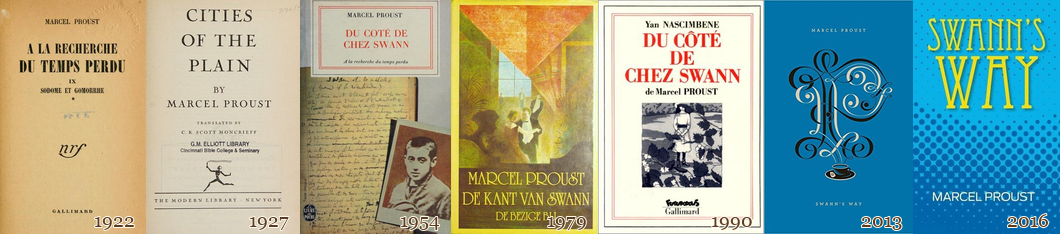
- 1922: NRF/Gallimard first edition, Sodome et Gomorrhe II, volume IX
- 1927: Modern Library edition, Cities of the Plain
- 1954: Gallimard edition, Du côté de chez Swann
- 1979: De Bezige Bij edition, De Kant van Swann
- 1990: Futuropolis edition, Du côté de chez Swann
- 2013: Penguin edition, Swann's Way
- 2016: Simon & Brown edition, Swann's Way
In Search of Lost Time
A life remembered one taste, jealousy, and room at a time.
Overview
In Search of Lost Time is Marcel Proust’s seven-part novel about a narrator trying to understand how memory, desire, art, and time shape a life. Its famous madeleine matters because a taste sends him back into childhood, but that is only the first door. The book follows family scenes, summer holidays, love affairs, and the social games of Paris.
This is a novel of attention more than speed. Proust can spend pages on a kiss withheld, a room at bedtime, a snobbish remark, or the way a face changes in memory. The reward is not a rush toward answers. It is the strange feeling that ordinary moments have been seen more closely than usual.
It is also very long, and the sentences can make a reader work. Start with Swann’s Way if you want a fair test. Read a little at a time, and don’t worry if the names and salons blur at first. The book’s own subject is how meaning gathers slowly.
Is This Book for You?
Yes, if...
- You want a book that lingers over memory, love, snobbery, and small shifts in feeling.
- You enjoy long sentences when they keep finding new things to notice.
- You can read in small stretches and let a huge novel take its time.
No, if...
- You want a plot that moves fast and stays close to the main action.
- You need each chapter to end with a clear new turn or cliffhanger.
- You'd rather spend your reading time on outward adventure than private thought.
Summary
Notable Quotables
“For a long time I used to go to bed early.” — translation: C. K. Scott Moncrieff
“Perhaps the immobility of the things that surround us is forced upon them by our conviction that they are themselves, and not anything else, and by the immobility of our conceptions of them.” — translation: C. K. Scott Moncrieff
“For it always happened that when I awoke like this, and my mind struggled in an unsuccessful attempt to discover where I was, everything would be moving round me through the darkness: things, places, years.” — translation: C. K. Scott Moncrieff